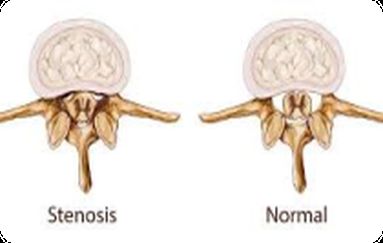
Spinal stenosis is a condition where the spaces within the spine narrow, placing pressure on the nerves. It most commonly affects the neck (cervical spine) and lower back (lumbar spine), causing symptoms such as pain, numbness, weakness, and reduced mobility. The condition may develop gradually and range from mild to severe. Without proper management, symptoms can worsen over time and affect daily activities. At Spine Mantra, physiotherapy-based treatment plans focus on relieving pain, improving movement, restoring function, and enhancing overall quality of life.
Who Gets Stenosis?
Spinal stenosis commonly affects people over 50 due to age-related wear and tear of the spine. Its prevalence increases with aging, and studies suggest it affects a significant portion of the population, making it one of the most common degenerative spinal conditions worldwide.
What makes Spine Mantra the best choice regarding Spinal Stenosis?
At Spine Mantra, expert physiotherapists provide personalized treatment plans for spinal stenosis. Our rehabilitation-focused approach helps reduce pain, improve mobility, and restore quality of life through evidence-based physiotherapy, minimizing the need for unnecessary medication or surgery.
Spinal stenosis appears in cases when the spinal canal narrows to such an extent that it presses nerves, and it may occur due to several reasons, in particular:
- Age-related degenerative Changes
Natural wear and tear starts in individuals above the age of 50, whereby the discs in the body are dried and narrowed down, and the degeneration of spinal joints occurs. This combination will shrink the free space that the nerves occupy, and that is why spinal stenosis is the most common age-related disorder.
- Arthritis Bone Spurs
Old-time osteoarthritis of the spine may cause additional bone to form (called bone spurs) near the vertebrae. These spurs may lead outwards into the spinal canal and be compressed directly against nerve roots.
- Bulging Disks or Herniated Disks
The cushion discs between vertebrae bulge or rupture, letting their inner material seep into the inner part of the spine. This tends to occur in the lower back or neck, leading to sudden nerve compression.
- Ligament Thickening
Stress and ageing cause the ligaments along the spine to thicken at times. When they protrude inwardly, they cause a decrease in the passageways of the nerves and aggravation of stenosis symptoms.
- Post-Injury Changes
Accidents may cut off the spinal canal in an instant due to fractures or displacement of vertebrae or oedema. Scar tissue can reduce the amount of space that nerves have, even after healing.
Symptoms of spinal stenosis may differ according to the location, the lower back (lumbar) or the neck (cervical) region, but the most common patient complaints include:
- The pain in the legs that increases during walking.
It is common to find many individuals complain about cramping and pains or heaviness in their legs after short walks. This pain is usually relieved by sitting or leaning forward, a habit referred to as neurogenic claudication.
- Numbness or tingling in a localised area.
Lumbar stenosis can cause tingling paresthesia in the buttocks, the thighs, the calves, or the feet; in the arms and hands when the neck is affected. These are feelings that can be intermittent, which in most cases aggravate after movement.
- The Lower Weakness
Nerve compression may be a symptom of the gradual development of muscle weakness, which is difficulty lifting the foot during walking (foot drop) or gripping trouble with holding things.
- Balance Issues and Coordination Problems
The spinal cord may be involved in cervical stenosis, causing wobbly gait and unsteadiness in using hands, being clumsy or falling a lot.
- Pain That Disappears on Forward Bending
This is because patients usually feel better leaning on the shopping cart or bending forward a little since the posture creates more room in the spinal canal.
- Standard or Radiating Pain
The pain in some instances is radiated along the arms or legs in the direction of the affected nerve, which in some cases can be confused with sciatica or a pinched nerve.
At Spine Mantra, we would treat spine stenosis using a non-surgical, customised method with the aim of restoring mobility, minimising pain, and enhancing the quality of life. One of the things that we do with the patients in our team is to be able to develop a treatment plan addressing the issue, rather than the symptoms.
- Comprehensive Assessment
We are beginning by knowing about your medical history, symptoms and your activity rate. Our thorough physical examination assists us in determining the location and the level of compression of the nerves.
- Tailor-made Physiotherapy Programs
Our physiotherapists work out specific exercise programs that help to build up the supporting muscles, improve posture and increase flexibility. This will alleviate pressure on the spinal nerves and will stop a flare-up in the future.
- Posture & Movement Training
We educate you on how to bend, lift and move safely in everyday living so that your back is kept safe and free of any pain.
- Techniques of Pain Management
By using heat therapy, ultrasound, and painless movements of the nerves, we assist in reducing inflammation and pain without utilizing a lot of heavy medication.
- Home Exercise Advice
We provide and train you on simple home exercises to ensure that you can post those results between visits and sustain results over a period of time.
Our aim at Spine Mantra is not only to help you heal spinal stenosis but also to experience the life of getting away with your pains and start walking, working, and living a full life.
Our diagnosis at Spine Mantra is formulated on finding out the precise nerve compression pattern and functional effects that are peculiar to the individual patient. There is no universal set of checks that we use; we monitor the way your body responds to position and movements that you undergo, and continue to associate them with more detailed imaging.
Symptom Pattern Mapping
To start with, a detailed pattern of your pain and discomfort will be charted. An illustration of this is that most of our lumbar stenosis patients will report that their legs feel heavy after 5-10 minutes of walking; however, it resolves when leaning forward on a shopping cart. We have heard of the case of cervical stenosis in which there is clumsiness of the hands or inability to button shirts. On observing these activity-related triggers, we can distinguish stenosis and other conditions related to the nerves.
Targeted Neurological Testing
As opposed to the simple reflex check, we isolate certain nerve roots to test. As an illustration, say you were having a problem raising your foot (this could be nerve compression of L5), or feeling numb in the thumb and index finger (this could be C6), we would go right to those tests.
Functional Correlation Advanced Imaging
We continue to match MRI or CT myelogram with your symptoms in the real world. Imaging studies indicate that stenosis is evident in the examinations of over 80 per cent of the population aged 60 and above, yet only 8 to 1 per cent of them have treatable symptoms. This is why we will never treat just the imaging result alone; we make sure that what we see on the scan will be what you experience in your life.
Dynamic Movement Assessment
We measure how your spine adapts to the positions, altering the canal space, being in the upright position, bending over and lying down. When the symptoms are better in some of the positions, it provides us with a clear guide on how to treat you.
McKenzie-Based Diagnostic Movements
Being the first clinic in Eastern India, where diagnosis and treatment are done using the McKenzie approach by our only certified McKenzie therapist in the whole Eastern India, incorporates McKenzie movements in the process of diagnosis. As an example, repeated extension or flexion exercises can help us understand whether your pain can be centralised, i.e., moved out of the legs or arms towards the spine, which is a strong indicator of good prognosis or peripheralised, pain radiating down your hand or leg, which is an indicator of bad prognosis. But in case of stenosis, Repeated Movement Testing is used to confirm whether the pain is due to spinal stenosis or it’s a mechanical pain.
The McKenzie method is the most effective since it diagnoses the precise movement strategy that blocks the nerve irritation and explains how you can manage flare-ups on your own.
Personalised Diagnostic Summary
When your tests are done, we bring forward a clear one-to-one matching set of results, what you feel, what we see and what scans confirm, so you know why you are getting your symptoms and how we will be treating them.
Using the evidence-based approach, Spine Mantra will guarantee that your management is on the right track even on the first visit.