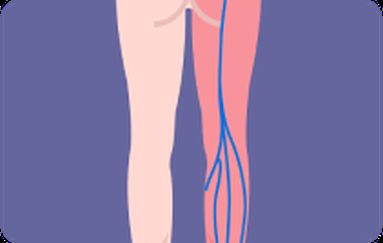
Sciatica causes radiating pain from the lower back or buttock down the leg due to irritation or compression of the sciatic nerve. Common causes include disc problems, spinal stenosis, and muscle tightness. Symptoms may include numbness, tingling, weakness, stiffness, and difficulty walking, standing, bending, or sleeping comfortably.
Why Spine Mantra for Sciatica?
By visiting Spine Mantra for sciatica, you can be assured that your condition will be managed by highly skilled physiotherapists specializing in nerve-related pain and musculoskeletal disorders.
Our treatment approach is completely customized — focused on relieving pain, improving mobility, and preventing recurrence through innovative techniques and patient education.
With a compassionate approach and the use of advanced, state-of-the-art technology, Spine Mantra provides an effective and completely non-invasive solution to accelerate your recovery and help you regain a better quality of life — pain-free and confident.
- Lumbar Disc Larry: Herniated Lumbar Disc:
When this gel-like substance in the central core of a lumbar spinal disc bulges out through a hole in the outside of the disc, it directly squashes the nearby sciatic nerve root. It ties down results in a sharp shooting pain along the route of the nerve.
- Lumbar Spinal Stenosis:
When the size of the spinal canal in the lower back area is narrowed, there is less room, which compresses the sciatic nerve and leads to pain, numbness, or weakness in the legs.
- Degenerative Disc Changes:
Age-related wear and tear make the discs between the vertebrae shrink, becoming rigid. The degeneration reduces the cushioning and osteophytes may irritate the nerve roots, which impact the sciatic nerve.
- Piriformis Compression:
Spasm or excessive tightness of the piriformis muscle in the buttock can compress the sciatic nerve as it passes beneath or through the muscle, resulting in localized pain and radiating discomfort along the leg.
- Spondylolisthesis: The nerve passage between two vertebrae can be reduced by one vertebra sliding forward over another in the lumbar spine, causing pain radiating in the legs through a pinched sciatic nerve root.
- Direct Trauma of the Nerve
There are traumas like falling, road accidents or heavy weight lifting that may lead to bruising or swelling around the sciatic nerve, which triggers the condition of inflammation and pain.
- Spinal Tumours or infections:
Sometimes rare, growths or infections around the spine can compress the sciatic nerve roots, causing continued sciatica symptoms.
In SpineMantra, we appreciate the fact that sciatica has a variety of symptoms, so that we get to know it correctly. The most typical symptoms you can have are:
- Radiating Leg Pain
It will be a sudden, shooting pain beginning in the lower back or buttock and radiating down one leg, usually all the way to the calf or foot. The course this pain can take usually follows the sciatic nerve.
- Numbness or Tingling
Most patients complain of pins-and-needles or numbness down the leg or in the foot. This is as a result of irritation of nerves, which involves sensation.
- Muscle Weakness
Feebleness of the muscles supplied by the sciatic nerve is frequently observed and may impair functional movements involving plantar flexion of the foot, toe movements, and knee flexion.
- Inability to Sit or Stand
You could feel dissatisfied with long periods of sitting or have greater pain in sitting up or walking.
- Burning/electric shock feeling
Others report a burning sensation or electricity shooting up the leg, indicating that the nerves are affected.
- Reduced Reflexes
In other cases, the knee or ankle reflexes could be decreased, meaning nerve root compression.
At SpineMantra, we make sure that the treatment of sciatica is focused and individualised. Our specialist physiotherapists will start by performing an in-depth analysis that will help us determine the real cause and extent of your problem of nerve irritation. With this, we devise a unique course of action aimed at easing the compression of the nerve and regaining functioning.
- Comprehensive Assessment
To start with, a more comprehensive assessment is a way to learn the specific cause and localisation of nerve irritation. It also encompasses physical examination and analysing movements to ensure that we understand the cause of your sciatica pain, thus providing a specific treatment for the same.
- Nerve Decompression Manual Therapy
Targeted spinal mobilisation to ensure appropriate pressure on the sciatic nerve roots is alleviated. It will ease the extreme radiating pain because it lessens nerve inflammation.
- Nerve Gliding Exercise
We include certain nerve mobilisation exercises that help increase the flexibility and motion of the sciatic nerve. The exercises can and will reduce nerve sensitivity and provide healing action through reduced adhesions or entrapments along the course of a nerve.
- Stability and Strength
It would be vital to strengthen the muscles around your lower back. We concentrate on engaging and training your core and lumbar stabilisers to maintain the spine, reduce disc stress and avoid subsequent irritation of the nerves.
- Piriformis Release
In patients who have involvement of piriformis muscle (Piriformis Syndrome), we do focused myofascial release and deep tissue massage to relax this tight muscle. The release of Piriformis alleviates this pressure on the sciatic nerve and causes the buttock and leg pain to ease.
- Progressive Functional Training
As you become less painful, we will take you through functional movement exercises that focus on your lifestyle and work activities. This is because this procedure guarantees that you are able to get full mobility, lessen stiffness, and prevent relapse.
- Continuous Observation and Customised Changes
Your progress is monitored, and your treatment plan is constantly adapted to your reaction. It is a tailored solution with an emphasis on faster recovery.
- Prevalence and Evidence Based on Data
It is estimated that anywhere between 10 and 40 per cent of adults worldwide at one time or another are afflicted by sciatica, and millions are pursuing treatment each year. Sciatica is a common problem in India owing to an associated increase in the number of sedentary activities and spinal stress. This information showcases how necessary a correct diagnosis is in order to have relief in time.
- Clinical Detailed Examination
We also perform a comprehensive physical examination, including assessment of your leg pain, muscle strength, reflexes, and sensation. This assists us in determining accurately the root of the sciatic nerve that is involved. Examples of such tests are the Straight Leg Raise (SLR), which helps in verifying the nerve irritation.
- Advanced Imaging (MRI/CT) use
We advise the use of an MRI or CT scan to obtain maximum information on the structural analysis of the spine when needed. These scans allow us to identify the presence of a herniated disc, spine stenosis, or any other form of abnormality that is responsible for compressing the sciatic nerve, resulting in a precise diagnosis.
- McKenzie Method of Mechanical Diagnosis and Therapy (MDT)
SpineMantra takes pride in becoming the first clinic in Eastern India having McKenzie certified clinician. The McKenzie technique is distinctive as the evaluation introduces repetitive procedures and certain postures to determine whether your discomfort is connected to a mechanical origin or not.
The technique will enable you to be actively involved in understanding your symptoms and dealing with them faster, thus preventing recurring episodes. We base our treatment on these findings, customised by our certified McKenzie therapist.
- Use of Clinical/Diagnostic Tools
Through integrating the actual evaluation in the clinics, imaging outcome, and McKenzie’s assessment, we can guarantee an adequate and accurate diagnosis. It is the best way of curing the underlying cause of your sciatica as opposed to the treatment of symptoms.