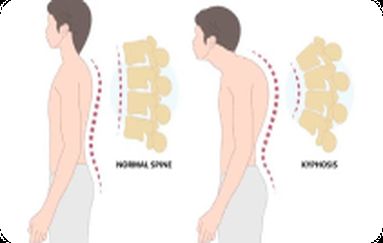
Kyphosis refers to an excessive forward curvature of the thoracic (upper back) spine beyond the normal physiological range. While a mild thoracic curve is a normal part of spinal alignment, pathological kyphosis results in an exaggerated rounded or hunched posture and may be associated with pain, stiffness, fatigue, and functional limitations.
Kyphosis can develop at different stages of life and may be postural, structural, or degenerative in origin. If left unmanaged, progressive kyphosis can alter spinal biomechanics, increase mechanical stress on surrounding tissues, and negatively impact overall posture, movement efficiency, and quality of life.
Who are affected by Kyphosis?
Kyphosis can affect individuals across different age groups, depending on the underlying cause. In children and adolescents, kyphosis is most commonly postural in nature or related to growth-related conditions such as Scheuermann’s disease. These forms are often mild and may remain undiagnosed unless symptoms or visible postural changes develop.
In adults, kyphosis may be influenced by occupational posture, prolonged sitting, and muscular imbalance. In older adults, age-related changes such as disc degeneration, osteoporosis, and vertebral compression fractures increase the likelihood of progressive thoracic curvature. The prevalence and severity vary widely and are influenced by factors such as bone health, physical activity levels, and overall spinal mechanics.
Why Choose SpineMantra For Kyphosis?
Kyphosis management at Spine Mantra is guided by structured clinical reasoning and evidence-based physiotherapy, rather than generic posture correction alone. Each patient undergoes a detailed assessment to identify whether the spinal curvature is postural, structural, or degenerative in nature, allowing treatment to be tailored to the individual rather than applied as a standard protocol.
Dr. Saiantini Dey is the first Mechanical Diagnosis and Therapy (MDT) Credentialed Therapist in Eastern India, with advanced training in orthopaedic physiotherapy and extensive experience in managing complex spinal conditions. Under her clinical leadership, Spine Mantra is the only clinic in Eastern India where MDT principles are consistently integrated into both evaluation and treatment for spinal and extremity disorders.
MDT, also known as the McKenzie Method, is a globally recognised, evidence-based approach that uses repeated movement testing and mechanical assessment to guide diagnosis, exercise prescription, and patient education. This method emphasises safety, reproducibility, and active patient participation through structured self-management strategies.
At Spine Mantra, treatment for kyphosis focuses on improving spinal mechanics, restoring functional movement, and building long-term self-management skills. The goal is not short-term symptom relief, but sustainable improvement in posture, movement efficiency, and overall spinal health.
Types and Causes of Kyphosis
-
Postural Kyphosis
Postural kyphosis is frequently seen in adolescents and adults with prolonged sitting habits, poor postural awareness, and reduced postural muscle endurance. The spinal curve in these cases is usually flexible and can improve with appropriate rehabilitation. In clinical practice, this form responds well to targeted physiotherapy, movement correction, and consistent posture retraining.
-
Structural Kyphosis (Scheuermann’s Disease)
Scheuermann’s kyphosis is a structural condition that typically develops during adolescence. It is characterised by wedge-shaped vertebrae, resulting in a more rigid thoracic curve. Patients often present with stiffness, discomfort, and reduced spinal mobility. This type requires careful monitoring and a structured, long-term management approach rather than simple posture correction.
-
Degenerative Kyphosis
Degenerative kyphosis is commonly seen in older adults and develops due to age-related changes such as disc degeneration, vertebral compression fractures, and osteoporosis. These changes reduce the spine’s ability to maintain an upright posture, often leading to pain, early fatigue, and difficulty standing or walking for prolonged periods.
-
Congenital Kyphosis
Congenital kyphosis results from abnormal spinal development before birth. It is usually identified early in life and may progress as growth occurs. Early assessment and appropriate intervention are important to limit curve progression and functional impact.
Types and Causes of Kyphosis
- Postural Kyphosis
Postural kyphosis is frequently seen in adolescents and adults with prolonged sitting habits, poor postural awareness, and reduced postural muscle endurance. The spinal curve in these cases is usually flexible and can improve with appropriate rehabilitation. In clinical practice, this form responds well to targeted physiotherapy, movement correction, and consistent posture retraining.
- Structural Kyphosis (Scheuermann’s Disease)
Scheuermann’s kyphosis is a structural condition that typically develops during adolescence. It is characterised by wedge-shaped vertebrae, resulting in a more rigid thoracic curve. Patients often present with stiffness, discomfort, and reduced spinal mobility. This type requires careful monitoring and a structured, long-term management approach rather than simple posture correction.
- Degenerative Kyphosis
Degenerative kyphosis is commonly seen in older adults and develops due to age-related changes such as disc degeneration, vertebral compression fractures, and osteoporosis. These changes reduce the spine’s ability to maintain an upright posture, often leading to pain, early fatigue, and difficulty standing or walking for prolonged periods.
- Congenital Kyphosis
Congenital kyphosis results from abnormal spinal development before birth. It is usually identified early in life and may progress as growth occurs. Early assessment and appropriate intervention are important to limit curve progression and functional impact.
- Visible rounding of the upper back or a hunched posture
- Back or neck pain, particularly with prolonged sitting or standing
- Spinal stiffness and reduced flexibility
- Early muscle fatigue due to increased postural demand
- Difficulty maintaining an upright posture for long durations
- In more advanced cases, reduced chest expansion affecting breathing efficiency
- Physiotherapy & Rehabilitation
Physiotherapy forms the foundation of kyphosis management in most cases. Treatment is individualised and may include:
Improving spinal mobility where appropriate
Strengthening postural and trunk-supporting muscles
Addressing flexibility restrictions and muscular imbalance
Gradually improving tolerance to upright postures and daily activities
The focus is on restoring function and reducing mechanical stress, not forcing posture correction.
- Postural and Movement Re-education
Patients are guided to develop better postural awareness and more efficient movement strategies during daily activities, work, and leisure. Emphasis is placed on sustainable changes that patients can realistically maintain over time.
- Mechanical Diagnosis and Therapy (MDT)–Based Care
Where clinically appropriate, assessment and treatment are guided by Mechanical Diagnosis and Therapy (MDT), also known as the McKenzie Method. MDT is a globally recognised, evidence-based approach used in the management of spinal and extremity musculoskeletal conditions.
Dr. Saiantini Dey is the first MDT Credentialed Therapist in Eastern India. Under her clinical leadership, Spine Mantra remains the only clinic in Eastern India where MDT principles are consistently applied during both evaluation and treatment.
MDT allows precise identification of mechanical pain patterns through repeated movement testing. This helps guide exercise prescription and encourages active patient participation through structured self-management strategies. The approach is widely regarded for its safety and strong research support across acute and chronic conditions.
- Bracing (Selective Cases)
In adolescents with progressive structural kyphosis, bracing may be recommended in collaboration with medical specialists. When used, it is always combined with physiotherapy to maintain mobility, strength, and functional independence during growth.
Spine Mantra uses our complete method for diagnosing kyphosis effectively.
Kyphosis assessment at Spine Mantra is centred on understanding how the spinal curve behaves under load, movement, and sustained postures, rather than judging appearance alone. The objective is to identify the mechanical drivers of the curvature, symptom behaviour, and factors influencing progression.
Postural and Spinal Alignment Assessment
We begin by analysing static posture in standing and sitting, observing thoracic curvature, head and shoulder alignment, scapular positioning, and overall sagittal balance. The relationship between thoracic kyphosis, cervical posture, and lumbar alignment is carefully examined, as compensatory patterns often contribute to pain and fatigue.
Detailed Physical Examination
A structured physical examination is performed to assess thoracic and lumbar mobility, spinal segment behaviour, muscle strength, endurance, and flexibility. Palpation and movement testing help identify stiffness, tenderness, or segmental restrictions. A key focus is determining whether the kyphotic curve is flexible or structural, as this distinction directly influences prognosis and rehabilitation strategy.
Mechanical Assessment and Repeated Movement Testing
Where appropriate, we apply Mechanical Diagnosis and Therapy (MDT) principles to assess how symptoms and posture respond to repeated movements and sustained positions. This helps identify directional preferences, mechanical pain patterns, and movement strategies that may reduce symptoms or improve spinal alignment. These findings form the basis for precise exercise prescription and self-management planning.
Functional Movement Analysis
We assess how the spine behaves during everyday activities such as prolonged sitting, standing, walking, bending, and task-specific movements related to work or lifestyle. This analysis helps identify faulty movement strategies, load intolerance, and postural habits that may be perpetuating symptoms or contributing to progression of the kyphotic posture.
Neuromuscular and Load Tolerance Evaluation
Assessment includes evaluating postural muscle endurance, trunk control, and the spine’s ability to tolerate sustained upright postures. Reduced endurance and poor load distribution are common contributors to fatigue and discomfort in individuals with kyphosis and are addressed directly in rehabilitation planning.
Imaging Correlation (When Clinically Indicated)
X-rays or other imaging investigations are recommended only when necessary to assess structural changes, curve severity, or underlying pathology. Imaging findings are always interpreted in conjunction with clinical examination and functional assessment, ensuring they support — rather than dictate — clinical decision-making