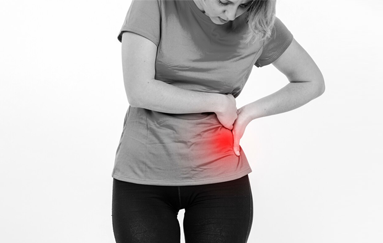
Hip pain can affect all ages but is more common in adults over 60, often due to osteoarthritis. Athletes, especially runners and football players, are prone to hip pain from overuse and joint stress. Obesity, previous hip injuries, congenital deformities, bursitis, and inflammatory conditions like rheumatoid arthritis also increase the risk of chronic hip pain.
Why Choose Spinemantra For Hip Pain?
At SpineMantra, we provide advanced non-surgical treatment for hip pain through personalised physiotherapy and evidence-based rehabilitation. Our expert team focuses on relieving pain, restoring mobility, and improving joint health using targeted therapeutic techniques, regular progress monitoring, and patient-centred care for long-term recovery and improved function.
Arthritis: Osteoarthritis and rheumatoid arthritis can wear down cartilage, causing hip pain and stiffness. This is common in older adults.
- Tendinitis: Inflammation of tendons around the hip joint, often from overuse, leads to pain. Athletes and active individuals are more prone to this condition.
- Bursitis: Inflammation of fluid-filled sacs cushioning the hip joint can cause sharp pain. Repetitive movements or prolonged pressure are common triggers.
- Muscle or Ligament Strain: Sudden movements, heavy lifting, or poor posture can strain muscles or ligaments. These strains cause localised discomfort and reduced hip mobility until properly treated.
- 5. Lumbar Spine–Related Pain (Referred Pain)
Very common and often missed, Disc bulge, prolapse, or facet joint issues in the lumbar spine can cause referred pain in hip joints. Pain may be felt in the hip, buttock, or groin.Usually associated with sitting intolerance, bending pain, or leg symptoms.
- Sacroiliac (SI) Joint Dysfunction
Pain around the buttock, lower back, or side of the hip. Common in people with prolonged sitting, pregnancy/post-partum, or uneven loading and Often worsens with standing from sitting or single-leg activities.
- 7. Hip Labral Tear
It is common in active adults and people with prolonged sitting or twisting movements. Deep groin pain, clicking, catching, or giving-way sensation is felt and frequently seen even without trauma.
- 8. Femoroacetabular Impingement (FAI)
This is a structural issue where hip bones abnormally contact each other causing groin pain, stiffness, and pain during squatting or sitting cross-legged. It is very commonly seen in young to middle-aged adults.
- 9. Piriformis Syndrome / Deep Gluteal Pain
It is buttock pain radiating towards the hip or thigh and often aggravated by sitting, driving, or prolonged inactivity. Commonly found in desk workers and long-hour drivers.
- Hip Flexor Tightness or Iliopsoas Dysfunction
This is anterior hip or groin pain seen frequently in people with prolonged sitting, poor posture, or weak core.Pain is usually felt during walking, climbing stairs, or getting up from sitting.
- Avascular Necrosis (Early Stage)
Reduced blood supply to the femoral head, Common in people with steroid use, alcohol intake, or metabolic issues.Early stages present as vague hip or groin pain before X-ray changes.
- 12. Stress Fractures (Especially in Elderly or Active Females)
It is gradual onset groin or hip pain and pain increases with weight-bearing. It is very common in osteopenic/osteoporotic patients.
Persistent or Activity-Related Hip Pain
Hip pain may present as a deep, aching discomfort in the groin, lateral hip, buttock, or upper thigh. Symptoms often worsen with weight-bearing activities such as walking, stair climbing, prolonged sitting, or transitional movements like standing from a seated position. Pain may be mechanical in nature—varying with posture and movement—or constant in more advanced conditions.
Stiffness and Restriction of Movement
Patients commonly experience stiffness in the hip joint, particularly after periods of rest or prolonged inactivity. Reduced range of motion may affect activities such as bending, squatting, sitting cross-legged, or rotating the leg. Progressive movement restriction often indicates joint involvement, soft-tissue dysfunction, or altered movement patterns.
Localised Tenderness, Swelling, or Inflammatory Signs
Inflammation around the hip joint or surrounding soft tissues may result in localised tenderness, swelling, or warmth. These symptoms are often associated with conditions such as bursitis, tendinopathy, or acute overload injuries and require timely assessment to prevent progression and chronicity.
Functional Limitations
Hip pain frequently interferes with daily and occupational activities. Patients may report difficulty walking long distances, standing for extended periods, sleeping on the affected side, or performing routine movements comfortably. Functional limitation is a key indicator guiding the need for targeted rehabilitation.
Physiotherapy & Rehabilitation
Physiotherapy forms the cornerstone of hip pain management at Spine Mantra. Our approach goes beyond symptom relief and focuses on identifying and correcting the underlying mechanical, postural, and movement-related contributors to pain. Treatment plans are individually structured to restore joint mobility, muscular strength, neuromuscular control, and functional stability. Evidence-based therapeutic exercises are prescribed progressively to improve load tolerance, enhance movement efficiency, and prevent recurrence.
Pain Management & Medical Coordination
Where required, pain and inflammation are managed in coordination with medical professionals. Pharmacological support, when advised by a physician, is used judiciously and always alongside active rehabilitation. Our emphasis remains on reducing pain through movement correction, tissue loading strategies, and functional restoration—ensuring patients do not become dependent on long-term medication for symptom control.
Movement Education & Lifestyle Optimisation
Sustainable recovery requires addressing daily movement habits that contribute to hip pain. Patients are guided on posture correction, ergonomic modifications, activity pacing, and safe movement strategies for work and daily life. Weight management, avoidance of prolonged static positions, and incorporation of appropriate low-impact physical activity are integral components of the rehabilitation process, supporting joint health and long-term outcomes.
Our Clinical Philosophy
At Spine Mantra, we integrate advanced clinical frameworks such as the McKenzie Method with contemporary, evidence-based physiotherapy practices. Our treatment philosophy prioritises patient education, active participation, and self-management. By empowering patients to understand their condition and take ownership of their recovery, we aim to deliver lasting pain relief, improved function, and a return to confident, active living.
Clinical Examination
Each patient undergoes a structured and thorough physical examination aimed at identifying the true source of hip pain. This includes detailed assessment of posture, gait mechanics, hip and lumbar spine mobility, and movement patterns. Palpation, joint-specific tests, and controlled movement analysis are used to identify pain provocation, movement restrictions, muscular imbalance, and joint or soft tissue involvement. Particular attention is given to differentiating hip pathology from referred pain originating from the lumbar spine or sacroiliac joint.
Detailed Medical & Functional History
A comprehensive history is obtained to understand the onset, progression, and behaviour of symptoms. Factors such as occupational demands, activity levels, previous injuries, surgical history, and systemic health conditions are carefully reviewed. Family history of musculoskeletal or degenerative conditions is considered where relevant. This information allows accurate clinical reasoning and helps narrow down potential contributing factors rather than relying on symptoms alone.
Movement & Functional Analysis
Functional assessment forms a critical part of our evaluation process. We analyse posture, gait, flexibility, muscle strength, and load tolerance during relevant daily and work-related activities. This helps identify faulty movement strategies, poor load distribution, and biomechanical stressors that may be perpetuating symptoms or limiting recovery.
Imaging Correlation (When Indicated)
Imaging investigations such as X-rays or MRI scans are recommended only when clinically indicated. These findings are always interpreted in correlation with clinical examination rather than in isolation. Imaging is used to support diagnosis, rule out serious pathology, and guide an individualised rehabilitation plan—not as a standalone determinant of treatment.