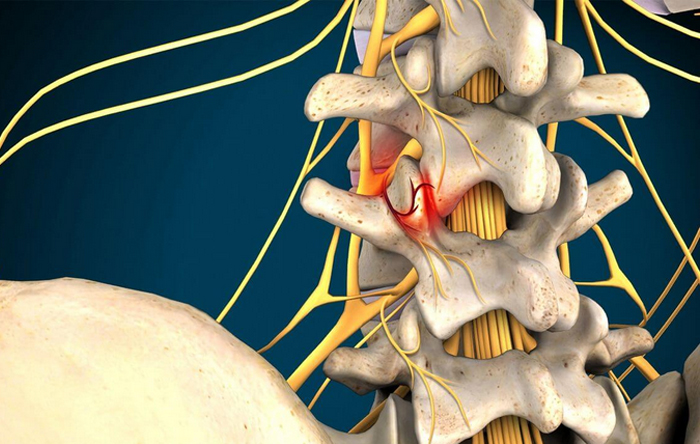
Facet joint disease occurs when the spine’s facet joints become painful due to ageing or injury, often leading to chronic neck or back pain, stiffness, and reduced mobility. If left untreated, the joints may become permanently stiff and significantly affect daily activities and work life. Facet joint syndrome involves both the joint structures and surrounding nerves, causing localised and radiating pain. Chronic low back pain related to this condition affects nearly 15–41% of patients worldwide. Around 55% of cases involve the cervical spine, while 31% affect the lumbar spine.
Why Choose SpineMantra for Facet Joint Syndrome?
At SpineMantra, we assess diagnostic scans and physical conditions to create personalised rehabilitation plans for facet joint pain. Our expert physiotherapists provide evidence-based treatment, mobility guidance, and compassionate care focused on long-term spinal health, recovery, and prevention of recurrence.
Facet joint syndrome arises from multiple factors that stress and degrade the spinal facets over time:
- Usual Wear and Tear: Cartilage wear in cervical and lumbar areas with age lowers the cushioning, causing pain.
- Excess Weight: Carrying excess weight places greater axial stress on the lumbar facets, speeding up degeneration and inflammation.
- Spinal Fractures: Stress or traumatic fractures change joint position, destabilize facets and hasten arthritic degeneration.
- Poor Posture: Slouching or forward head position causes uneven loading of facet joints and stress on surrounding ligaments.
- Repetitive Bending or Twisting: Continuous forward or backwards movements strain joint capsules, causing microtrauma and progressive degeneration.
- Sedentary Lifestyle: Inactivity causes core and paraspinal muscle weakness, decreasing spinal stability and elevating facet loading.
- Genetic Predisposition: Genetic differences in cartilage hardness or joint structure may predispose certain individuals to facet degeneration.
Facet joint syndrome can show up in a few common ways:
- Aching Pain: You may have a constant pain in your lower back where the joints are located.
- Referred Discomfort: Pain can spread to nearby regions, including buttocks, hips, thighs, knees, pelvis, or abdomen.
- Shooting Pain: Shooting Pain: A sharp, electric-like pain radiates from the back into the buttock, thigh, or even the foot. You can also feel as though the leg is weak or gets tired very easily.
- Tender Spot: Gently applying a light touch over the affected joint tends to exacerbate the pain.
- Posture-Related Pain: You’ll often feel worse after getting up in the morning, sitting still for a long time or when bending or twisting backwards. Leaning forward usually eases the pain.
- Morning Stiffness: Your back can feel tight when you first wake up or after sitting still; moving around typically loosens it up.
We start treatment by identifying the precise origin of your pain via a complete clinical examination and imaging analysis. We begin with manual therapy, targeted exercises and electrotherapy to restore joint mechanics, reduce inflammation, and improve spinal alignment. We emphasize gradual improvement, where each motion creates strength and stability without irritating symptoms. Educating patients about ergonomics and activity modification is essential in avoiding recurrence and sustaining long-term spinal stability.
At Spinemantra, we select the McKenzie Technique or MDT Approach as one of our cornerstones of care because it allows you to take control of pain management through precise, patient-led movements. This evidence-based technique applies repetitive end-range spinal movements to centralize pain and restore joint mobility. Our clinicians guide you to find the most relieving movement, such as extension, flexion, or lateral glide. They also train you to perform these exercises safely at home. Encouraging independence and quick symptom relief, the McKenzie Technique speeds up recovery and reduces dependency on passive treatments.
In addition to McKenzie, we provide a range of adjunctive therapies that are customized to suit your requirements. Joint mobilization and soft tissue release to relieve muscle spasms and enhance blood flow. For cases where medical intervention is required, we guide patients with proper referrals while focusing on physiotherapy-based care such as manual therapy,exercise therapy, electro therapy and functional training to address the root cause of pain. We also include re-education of posture to stabilize supportive musculature. Lastly, our clinicians offer lifestyle coaching, such as and ergonomic changes, to help your spine stay strong and pain-free long after treatment is finished.
- Clinical Evaluation: We start with a detailed medical history and physical examination to identify pain patterns and measure spinal mobility. This usually diagnoses facet joint disease by reproducing pain on certain movements or palpation.
- Imaging Studies: Standard X-rays assist in excluding late degenerative changes in facets or discs. For additional clarity, we prescribe MRI or CT scans to see the soft tissues, narrowing of the joint space, and osteoarthritic changes.
- Functional Movement Assessment: Our physiotherapists evaluate posture, spinal mobility, and strength deficits to confirm whether your symptoms are linked to facet joint dysfunction. Relief of significant pain after this block establishes facet joint irritation and directs assertive, follow-up treatment.