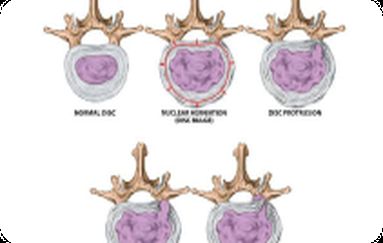
Disc sequestration is the most severe type of herniated disc, where disc fragments detach and enter the spinal canal. It can compress nerves, causing intense pain, weakness, or permanent nerve damage if untreated. MRI is the best method to detect sequestrated fragments and evaluate nerve compression.
Who Gets Disc Sequestration?
Disc sequestration commonly affects adults aged 30–50 with degenerative disc disease. People with physically demanding jobs, sports strain, prolonged sitting, or spinal trauma are at higher risk. It usually occurs in the lower lumbar spine and is rare in children and older adults.
Why Choose SpineMantra for Disc Sequestration?
At SpineMantra, we use advanced imaging and personalised therapy programs to support spinal health. Our expert spine specialists and physiotherapists create evidence-based, non-surgical rehabilitation plans focused on safe, comfortable, and long-term recovery for every patient.
- With age, spinal discs lose flexibility and water content. The fibrous outer covering weakens, leading to tiny bulges and tears under daily stress.
- Using the back instead of the strong leg and hip muscles to lift heavy objects unnecessarily stresses the disks. This raises the possibility of extrusion of the inner gel.
- Unequal stresses on the disk fibres, produced by twisting, bending, and rotating the spine repetitively under heavy loads, accelerate the process of tearing and herniation.
- Severe trauma from falls, accidents, or sudden impact can stress the spinal discs and trigger disc sequestration.
- Genetics can cause early disc degeneration by altering disc shape and durability.
- Smoking decreases perfusion of spinal tissue, and obesity exerts a constant mechanical strain on the disks, accelerating their degeneration and increasing the chances of herniation.
- Radiating Pain: In case a disc compresses a nerve, pain may be experienced shooting down from the lower back into the buttocks, thigh, calf, and occasionally the dorsum of the foot. In the neck, this pain is felt travelling into the shoulder and arm.
- Sharp or Burning Sensation: Patients often report sharp or burning sensations, sometimes compared to an electric shock, which may worsen during everyday movements.
- Worsened by Coughing or Sneezing: Activities that put pressure on the spinal column can trigger a sudden increase in the severity of pain, such as coughing, sneezing or bending forward.
- Numbness & Tingling: Patients may feel pins and needles or lose sensation in affected areas of the legs, feet, arms, or hands.
- Muscle Weakness: Muscles under the control of the compromised nerve can weaken, leading to problems such as tripping while walking or being unable to lift or hold an object because of weakness.
- Conservative Activity Modification & Support
We start by encouraging you to steer clear of manoeuvres causing pain like bending, twisting, or lifting heavy objects. Our medicos suggests using ergonomic supports (lumbar rolls, back supports) and the application of heat or ice packs to decrease inflammation. These simple changes usually bring relief within days, allowing the disc time to heal without surgery.
- Targeted Medication Management
As a physiotherapy-focused centre, SpineMantra prioritises non-surgical care. Medication support is guided by collaboration with medical experts, while our emphasis remains on physiotherapy, exercise-based recovery, and safe pain management techniques. Muscle spasms can be relieved with short-course muscle relaxants, and in exceptional situations where severe pain is chronic , we can use low-dose, short-course opioids under close surveillance. Corticosteroid injections near spinal nerves are reserved for recalcitrant cases, carefully done with imaging.
- McKenzie Method Physical Therapy
We prefer the McKenzie method or MDT as it provides a customised treatment plan based on your movement preference. Our certified MDT clinicians train you on self-assessment skills and Reductive movements that stimulate the herniated material to retract from the nerve root. This evidence-based technique hastens recovery, minimises recurrence risk, and sustains long-term spinal well-being through active patient involvement.
- Minimally Invasive Surgical Options
Surgical intervention is considered only when conservative treatment fails. In such cases, SpineMantra refers patients to trusted spine surgeons while continuing to provide essential physiotherapy for rehabilitation and recovery. We explore spinal fusion or artificial disk replacement, always opting for the least amount of intervention to keep flexibility and stability intact.
- Medical History and Physical Examination: The first step for a clinician will be assessing your symptoms and past health history. Neurological Testing like Reflexes, muscle strength, gait, and sensory modalities of light touch, pinprick, or vibration and neurodynamic test are tested. The findings aid in the identification of which spinal nerves are truly damaged.
- X-rays: Basic X-rays may not reveal soft disc problems but help rule out fractures or alignment changes before advanced scans.
- Magnetic Resonance Imaging: It is the best imaging modality for soft tissues because it accurately localises the herniation, measures the extent of it, and detects nerve-root compression without the use of ionising radiation.
Computed Tomography with Myelography: This can be used when MRI is contraindicated or yields inconclusive results; the presence of the myelogram contrast increases the ability of CT to provide some cross-sectional views of the spine.